



Paintball enthusiasts revel in the thrill of the game, but the colorful aftermath of bruises often leaves players curious about their duration and the best ways to handle them. In this piece, we delve into the world of paintball bruises, unraveling the mysteries surrounding their longevity and offering practical advice for managing them effectively.
Understanding Paintball Bruises:
Paintball bruises emerge when the kinetic force of a fired paintball meets the body, leaving behind colorful reminders of the game’s intensity. Despite the protective gear worn by players, the impact of these high-speed pellets can still result in bruises, especially on exposed skin or from close-range shots.
Duration of Paintball Bruises:
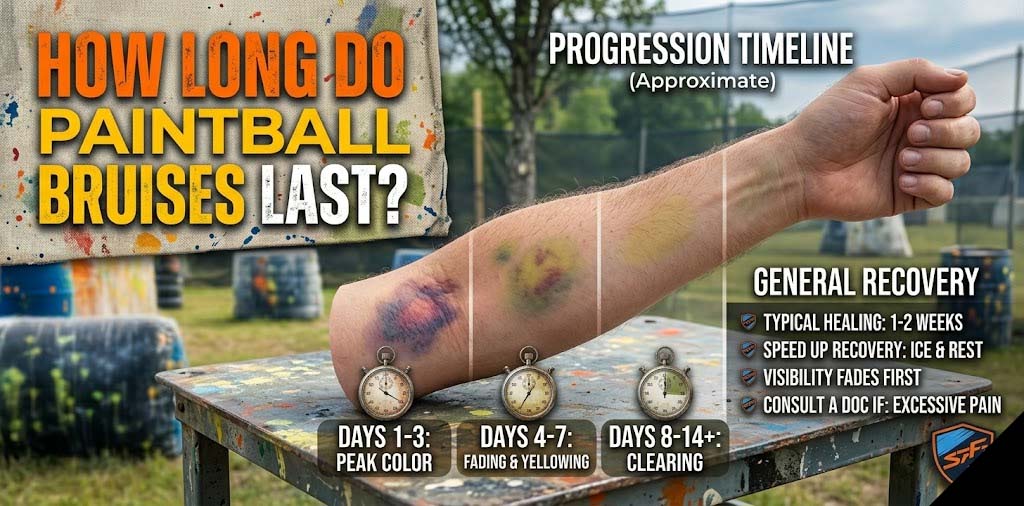
The lifespan of paintball bruises varies, influenced by factors such as impact force, firing distance, and individual healing capabilities. Generally, these bruises dissipate within one to two weeks, though more significant contusions may linger for several weeks before fully fading.
Factors Affecting Healing Time:
Several variables contribute to the duration of paintball bruising:
- Impact Intensity: The force behind the paintball’s impact, particularly at close quarters or with high-speed shots, influences the depth and duration of the resulting bruise.
- Impact Site: Bruises occurring on areas with less padding, like the ribs or shins, may take longer to heal due to the limited cushioning provided by surrounding tissue.
- Individual Response: Each person’s healing process differs, influenced by factors such as age, overall health, and genetic predisposition to bruising.
- Health Considerations: Existing medical conditions or medications that affect blood clotting can prolong bruise healing, warranting additional care.
Management of Paintball Bruises:
While paintball bruises are typically harmless, managing them effectively can expedite recovery and alleviate discomfort. Consider the following strategies:
- Cold Therapy: Immediately applying ice to the affected area can reduce swelling and mitigate pain. Wrap the ice pack in a cloth to prevent direct contact with the skin and apply for 15-20 minutes multiple times daily.
- Pain Management: Over-the-counter pain relievers like ibuprofen or acetaminophen can help manage bruise-related discomfort. Adhere to recommended dosages and precautions.
- Compression Support: Utilize an elastic bandage to compress the bruised area gently, minimizing swelling and providing additional support during healing. Avoid excessive tightness to maintain healthy circulation.
- Elevation Technique: Elevating the bruised limb above heart level when resting can aid in reducing swelling and promoting optimal healing. Support the limb with pillows or cushions for added comfort.
- Arnica Application: Consider using arnica gel or cream topically on the bruise to alleviate inflammation and accelerate the healing process. Follow product instructions for safe and effective usage.
- Rest and Caution: Allow the body adequate time to recuperate by refraining from strenuous activities that could exacerbate the bruise. Avoid returning to paintball until the bruise has completely healed to prevent further injury.
When to Seek Medical Attention:
While most paintball bruises resolve without medical intervention, certain circumstances warrant professional evaluation:
- Severe Bruising: If the bruise is unusually large or accompanied by intense pain, medical assessment may be necessary to rule out underlying injuries.
- Signs of Infection: Watch for symptoms such as escalating redness, warmth, or pus formation around the bruise, indicating potential infection requiring medical attention.
- Persistent Symptoms: If swelling or mobility limitations persist despite self-care efforts, consult a healthcare provider to assess the bruise’s severity and explore additional treatment options.
Medical History Considerations: Individuals with pre-existing bleeding disorders or those taking blood-thinning medications should exercise caution and seek medical advice promptly if experiencing prolonged bruising or unusual symptoms.
Conclusion:
Paintball bruises are a testament to the game’s intensity, often fading as swiftly as they appear with proper care and attention. By understanding the factors influencing bruise duration and adopting appropriate management techniques, players can navigate the aftermath of paintball matches with confidence. Prioritizing safety during gameplay remains paramount, ensuring that the thrill of paintball is enjoyed without unnecessary risks or prolonged discomfort from avoidable injuries.